Training New Technicians with Recorded Remote Sessions: The Program That Builds Itself
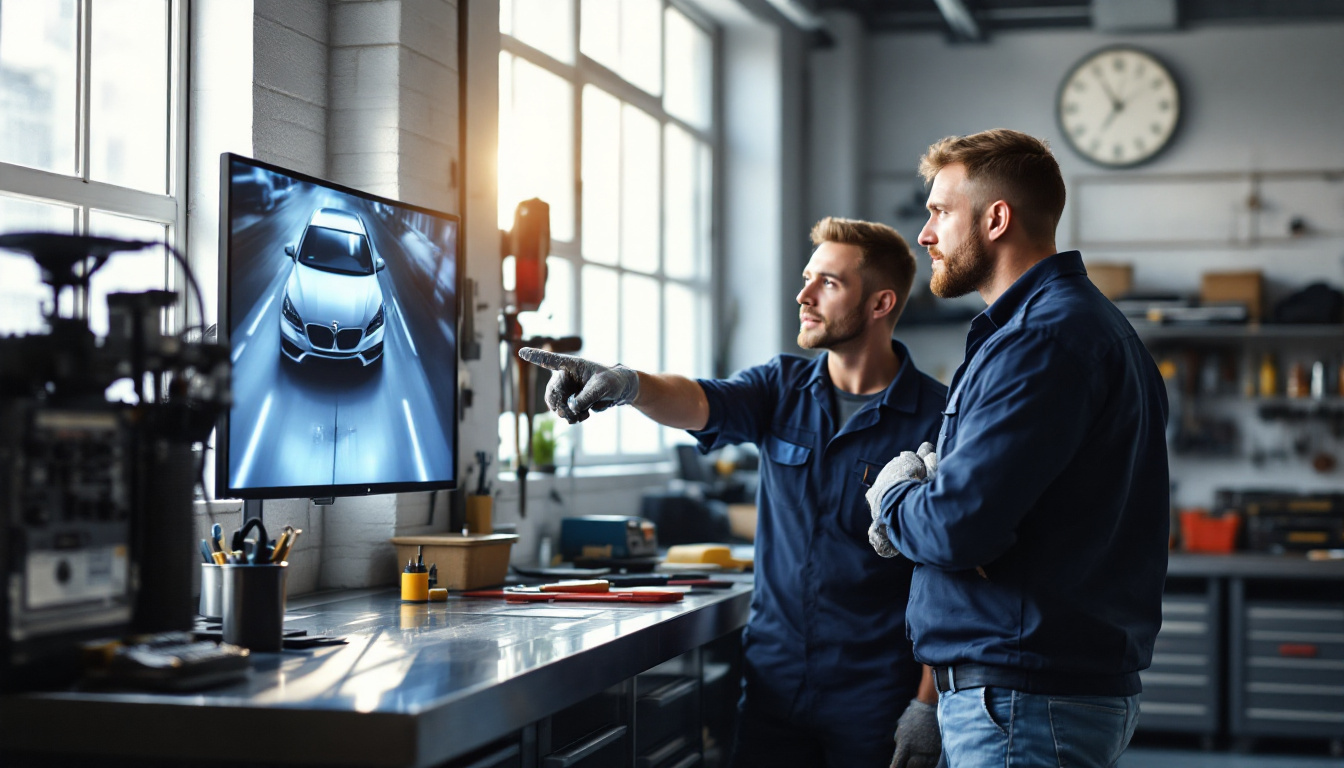
A practical training program built from recorded sessions, AI-generated procedure steps, and supervised remote work — turning the mentor bottleneck into a library and a workflow.
Training New Technicians with Recorded Remote Sessions: The Program That Builds Itself
TL;DR
Every shop's training program has the same bottleneck: the person best qualified to teach is the person least available to teach, so onboarding happens in stolen moments and the fifth repetition of the same walkthrough. Recorded sessions dissolve the bottleneck's premise — the expert's real work, captured once, teaches indefinitely. The program that emerges has three moving parts: a library (promoted recordings plus AI-generated procedure steps), a loop (watch → attempt recorded → compare), and supervised solo work (the senior watching the junior's session remotely, chat-precise, replay-debriefed). This post assembles the parts into a program a real shop can run — and names what recordings can and cannot teach.
The bottleneck, stated fairly
Nobody plans bad onboarding. It emerges from honest arithmetic: the senior tech bills the shop's hardest hours, so training gets the leftovers — a walkthrough between jobs, "shadow me today," the same station-setup explanation performed live for the fourth hire in two years. The knowledge transfers, slowly, at the price of the mentor's most valuable time, and it evaporates when the mentor takes a vacation or a better offer.
The fix is not more discipline. It is changing what a demonstration costs: performed live, it costs the expert's hour every time; captured, it costs the hour once.
Part one: the library that accumulates as a side effect
The raw material already exists — several times a week, somebody does a job right in a recorded session. The program starts with one habit: promote one good session a week. Name it, shelve it, done. Two shelves:
- Procedures — clean runs of recurring work: station setup, the scan-suite workflow, front-desk end-of-day, the update ritual. Each gets AI-generated steps attached, so the recording doubles as a written, followable document.
- Diagnostic replays — real problems solved in visible order, dead ends left in. These teach the thing manuals can't: the order in which an experienced mind checks things. A new tech who has watched five good no-start diagnoses has absorbed a decade's habit of "codes, then freeze frame, then the cheap physical checks" before their first solo attempt.
A quarter of that habit produces a curriculum no one sat down to write — and one that multi-store operations can propagate to every location the day it's promoted.
Part two: the loop — watch, attempt, compare
Passive replay marathons teach little; the working format is tight and paired with doing:
- Watch the reference recording of the exact job about to be attempted — fifteen minutes, not an afternoon.
- Attempt the job in a recorded session of their own.
- Compare the two recordings — where the runs diverged is the personalized lesson, and the debrief writes itself with timestamps.
The comparison step is where this beats both shadowing and documentation: the junior sees their own detours next to the expert's line, concretely, without anyone reconstructing from memory. And every strong attempt is a candidate for the library — the second cohort learns partly from the first cohort's best runs, which is what "the program builds itself" means in practice.
Part three: supervised solo work, without the shoulder
The scariest handoff in training is the first solo run on a machine that matters. Remote supervision softens it into a gradient:
- The junior drives the session at the station; the senior watches live from anywhere — the office, home, another store — with chat for precision ("check the fuel trim first", "the code is P0301") and the ability to take controls if things head somewhere expensive.
- Presence fades over time: watching throughout, then checking in, then just being reachable — with the recording as the safety net that makes early independence low-stakes.
- The debrief runs off the replay, not recollection: here's the moment you skipped the ground check is coaching; "I think you rushed" is vibes.
For work on programming stations, the same sessions ride the shop's audit logging — which quietly teaches the professional norm that matters most on such machines: sensitive capability travels with accountable identity. New techs who learn inside that fabric never experience accountability as an imposition.
What recordings honestly cannot teach
| Recordings teach | They don't teach |
|---|---|
| Procedures, in exact order | Hands: feel, force, physical technique |
| Diagnostic reasoning made visible | Judgment in genuinely novel situations |
| This shop's actual practice | Systems theory — courses still matter |
| Software and station workflows | Credentialed security work — NASTF VSP and OEM requirements stand regardless |
The right conclusion isn't "recordings plus nothing" — it's that the mentor's reclaimed hours go where only mentors work: hands-on skills, edge cases, judgment, and the conversations that make someone a colleague rather than a task-executor.
Running it on the product, and the cost of admission
Everything above ships in IgniteRemote's one plan — recording, replay and download, AI training steps, live session sharing, chat, audit — at $24.90/month or $249/year, unlimited computers and technicians (pricing), which matters here specifically because trainees are technicians too and seat-metered tools tax exactly the growth this program serves. Standing candor: USB passthrough remains in development, included when it launches; the training program needs none of it.
The real cost of admission is the weekly promotion habit and the mentor's willingness to be recorded doing ordinary work. In exchange: onboarding that starts from a library instead of a lecture, expertise that survives vacations and departures, and — the quiet compounding effect — a shop whose best day's work, once done, keeps teaching forever.